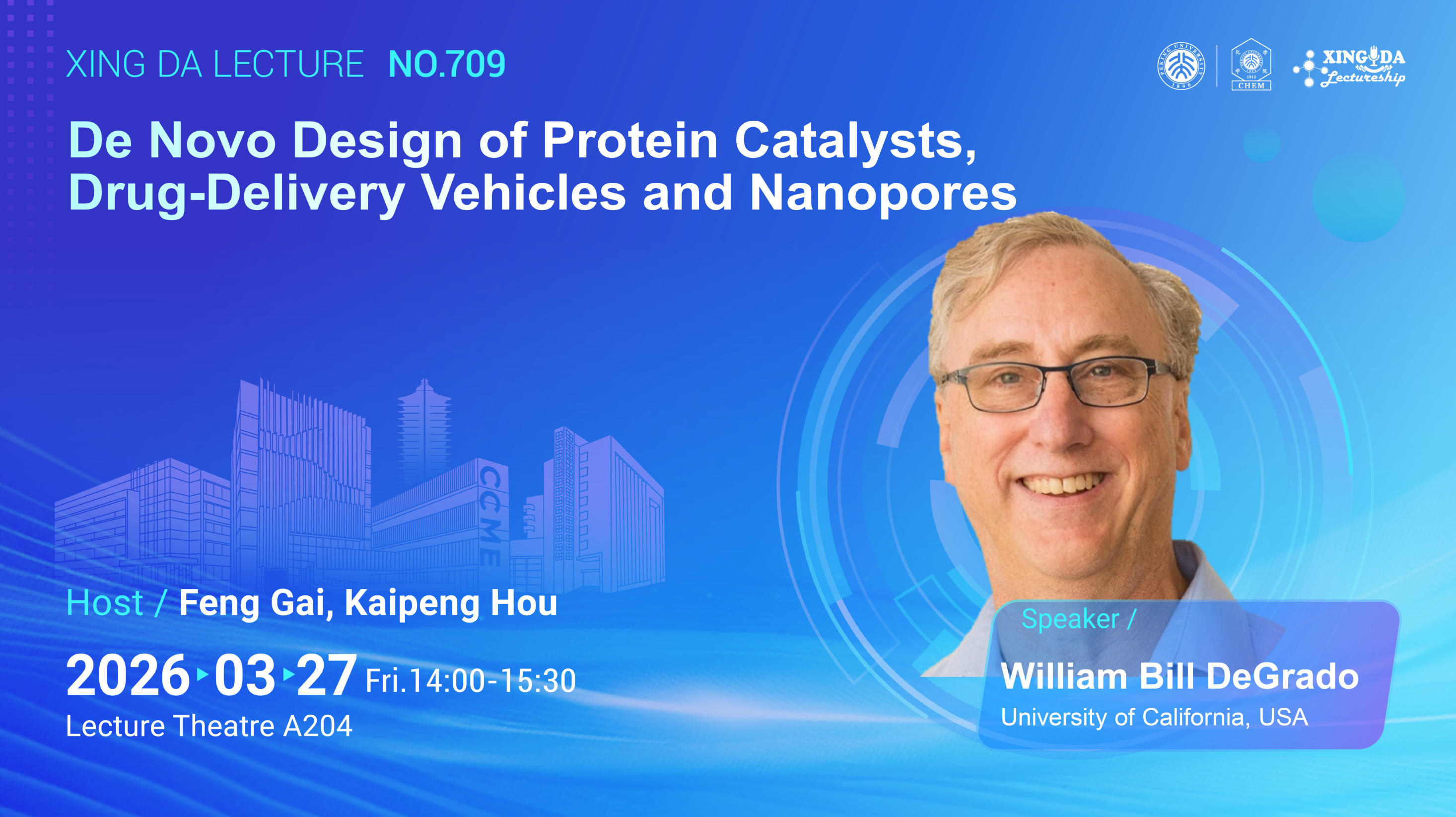
Abstract
De novo protein design involves the creation of proteins from scratch, rather than by modification of natural proteins. A variety of functionally rich proteins have been achieved. Some functions, such as binding to protein interfaces have been relatively easy, because the interactions that stabilize interfaces are also used to stabilize the folded structures of proteins, and available computational methods have been well calibrated to this task. It has been more difficult to design functions that involve molecular recognition of small, polar molecules or dynamic processes. I will describe recent progress in the design of proteins that bind small molecules, and the use of these proteins in potential biomedical applications such as drug targeting, delivery and as drug reversal agents. We also have designed of proteins with highly efficient enzymatic activities, including ones that catalyze reactions at rates that exceed most natural enzymes. Moreover, we have designed proteins that catalyze reactions for which there were no known protein catalysts.
A second challenging area of interest in de novo protein design has been the construction of useful membrane proteins. I will describe the design of semisynthetic membrane proteins that function as ion channels, and their application to DNA and RNA sequencing.
Biography
William Bill DeGrado’s work focuses on the design of small molecule drugs, peptides, and proteins to address biological and mechanistic questions. Since 2011, Bill has been a professor in the Department of Pharmaceutical Chemistry at the University of California San Francisco. Prior to UCSF, he worked in both academics and industry, including the Raiziss Professor in the Department of Biochemistry and Biophysics at the University of Pennsylvania (1996 – 2011); DuPont Merck Pharmaceutical Company (1990 – 1996); DuPont Central Research (1981 to 1990). He graduated from Kalamazoo College in 1978, received his Ph.D. in organic chemistry from the University of Chicago (1981), and joined DuPont Central Research without an intervening postdoctoral position. He is an elected member of the National Academy of Sciences (1999), the American Academy of Arts and Sciences (1998), and the National Academy of Inventors (2014).



 北大化学微信