Abstract
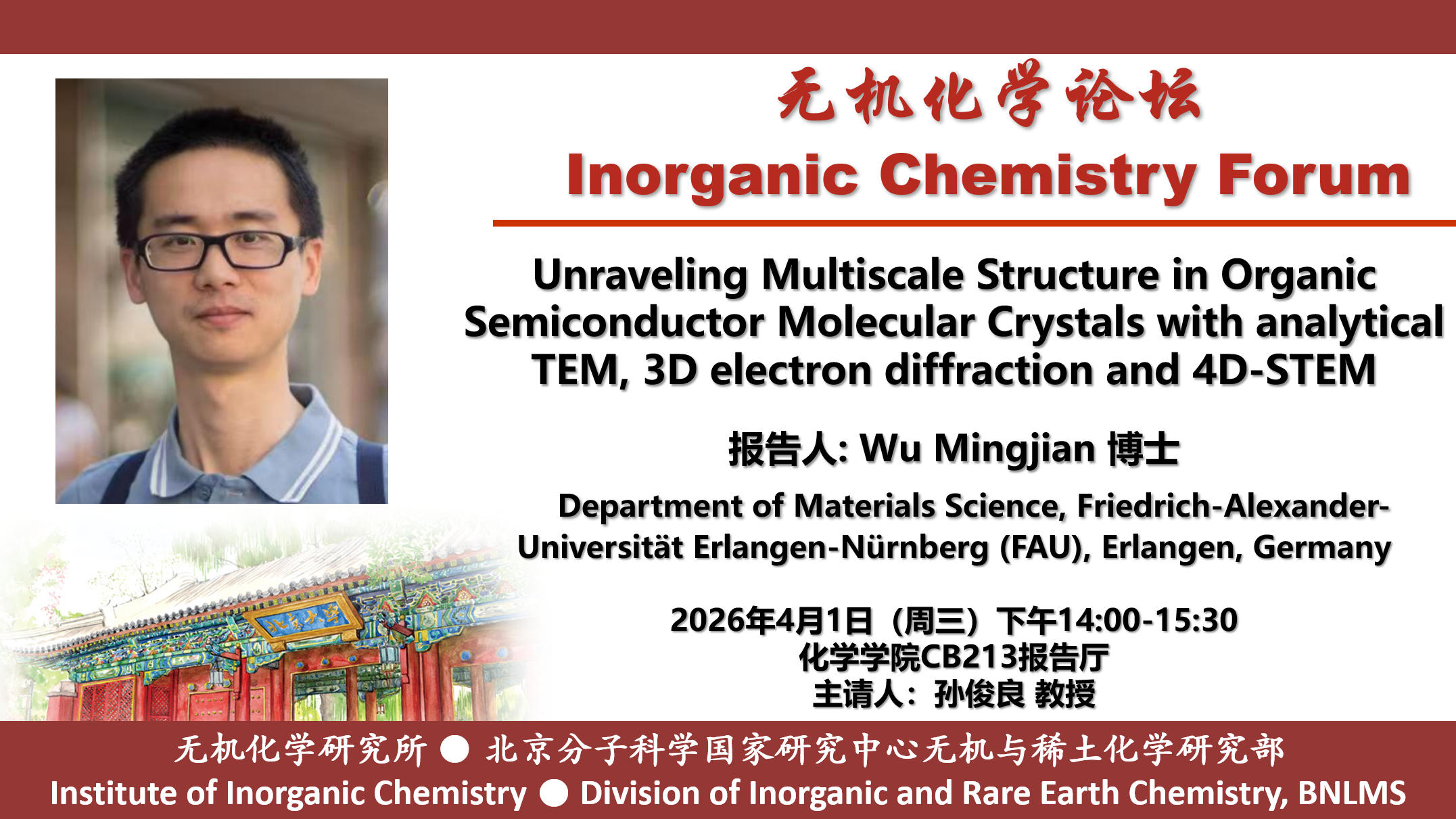
Harnessing the complex nano-scale structure in organic semiconductors is essential to tailor their functionality and performance. For example, the orientation of π-π stacking domains and grain boundaries are essential to their electric transport properties in organic field-effect transistors (OFET); in bulk hetero-junction (BHJ) organic solar cells (OSCs) it determines exciton dissociation and charge carrier pathways thus critical to the performance of the cells. These structural properties at different length scales are highly sensitive to processing conditions and protocols. Unravel the structure of organic semiconductors from molecular to device scale is essential to establish the processing-structure-properties relationship. Fast electrons interact strongly with matter and can deliver a multitude of structural and analytical signals to study the structure, chemistry and composition of materials at high spatial resolution. Modern electron microscopes, as “a synchrotron in a microscope” [1], hold the potential for such studies. However, direct observation of structures of organic semiconductors using electron microscopy face certain challenges including radiation damage, limitations due to sample geometry and yet-to-established workflows etc.
In this talk, I will report our efforts toward systematically and correlatively characterize the structure of OSCs and organic semiconductor thin films using TEM: from nano-morphology of OSC using analytical methods (with energy-filtered TEM or spatially resolved electron energy-loss spectroscopy) [2], to evaluate their texture with EF-SAED (energy-filtered selection area electron diffraction) and 3D electron diffraction [3, 4]. The results are compared to that from identical sample using established X-ray based method using lab and synchrotron sources. [4] Furthermore, I will showcase probing local structural information organic semiconductor thin films with a dose-efficient method 4D-scanning confocal electron diffraction (4D-SCED) technique [5]. Finally, I will discuss the merit when this technique is coupled to a state-of-the-art hybrid-pixel direct electron detector [6]. The unique combination of imaging, diffraction and spectroscopy methods in a single instrument of TEM enables straightforward, correlative study of organic semiconductors [4].
Refs:
[1] Ramasse, Q. Ultramicroscopy. 180 (2017) 41
[2] Rechberger, S., et. al., Solar RRL. 4 (2019) 1
[3] Hawly, T., et. al., ACS Appl. Mater Interf. 14 (2022) 16830
[4] Kraus, I., et. al., Nat. Commun. (2026) in press [preprint: arXiv:2502.11254]
[5] Wu, M., et. al.,Nat. Commun. 13 (2022) 2911
[6] Wu, M., et. al., J Phys. Mater. 6 (2023) 045008
Biography
Dr. Mingjian Wu is a staff scientist at the Institute of Micro- and Nanostructure Research at Friedrich-Alexander-Universitaet Erlangen-Nuernberg in Germany. He obtained Bachelor’s and Master’s degrees in Materials Science from Hunan University, China, and Doctor degree (summa cum laude) in Experimental Physics from Humboldt-Universitaet zu Berlin in 2014.
He is an enthusiastic “nano-photographer” with over 15 years of experience in electron microscopy. His expertise lies in developing and applying advanced microscopy, diffraction, and spectroscopy techniques—integrated with in situ, operando, and data science approaches—to gain unique insights into modern functional materials. His research interest lie in the investigation of organic semiconductors, in particular, developing methods and techniques to unravel structures that are difficult to study. He has published ~80 peer reviewed articles. In 2023, he received the “Outstanding Paper Award” from European Microscopy Society for contribution of developing 4D-STEM method for organic solar cell materials.
吴明健博士现任德国*埃尔朗根—纽伦堡大学(Friedrich-Alexander-Universität Erlangen-Nürnberg)材料学院 微纳结构研究所(Institute of Micro- and Nanostructure Research)研究科学家(Staff Scientist)。他本科和硕士毕业于湖南大学材料科学与工程专业,并于2014年在德国柏林洪堡大学(Humboldt-Universität zu Berlin)以德国最高荣誉等级(summa cum laude)获得实验物理学博士学位。
吴博士从事电子显微学研究超过15年,是一位充满热情的“纳米摄影师”。他的研究主要致力于开发和应用先进的电子显微、衍射与谱学技术,并结合原位(in situ)、操作条件(operando)以及数据科学方法,以深入理解现代功能材料的结构与性质关系。目前,他的研究兴趣集中在有机半导体材料,特别是发展新的显微和衍射技术,用于解析传统方法难以表征的复杂结构问题。迄今为止,他已发表近100篇同行评议学术论文。2023年,他开发的适用于有机太阳能电池材料结构表征的4D-扫透共聚焦电子衍射(4D-SCED)技术的工作,获得欧洲显微学会(European Microscopy Society)杰出论文奖(Outstanding Paper Award)。



 北大化学微信